

A knocking Ingenium engine can leave an Evoque owner choosing between further diagnosis, a major engine repair and selling the vehicle as it stands. Essex Scrap buys complete faulty vehicles directly, including higher-value cars that should not be valued as metal alone.
Important: this guide covers the 2.0 diesel Ingenium
The 2.0 Ingenium diesel appeared in later first-generation L538 Evoques and continued into the L551. It is not the older 2.2-litre diesel, and petrol Ingenium engines have a different fault pattern. Confirm the engine from the VIN or registration before applying diesel-specific advice about the DPF and oil dilution.
Direct answer: can you sell a faulty Ingenium Evoque?
Yes. We buy complete Range Rover Evoques with engine knocks, suspected bottom-end damage, timing-chain concerns and other costly faults. Send the registration, mileage, postcode, diagnosis and photographs for a vehicle-specific quote and collection assessment.
The Harlow Evoque We Bought
This 2.0 diesel Range Rover Evoque was offered to us in Harlow with a knocking engine and reported bottom-end failure. Although the engine problem was serious, the rest of the vehicle was complete and presentable. That matters: specification, bodywork, interior, wheels, keys and paperwork can leave significant value beyond a basic scrap calculation.

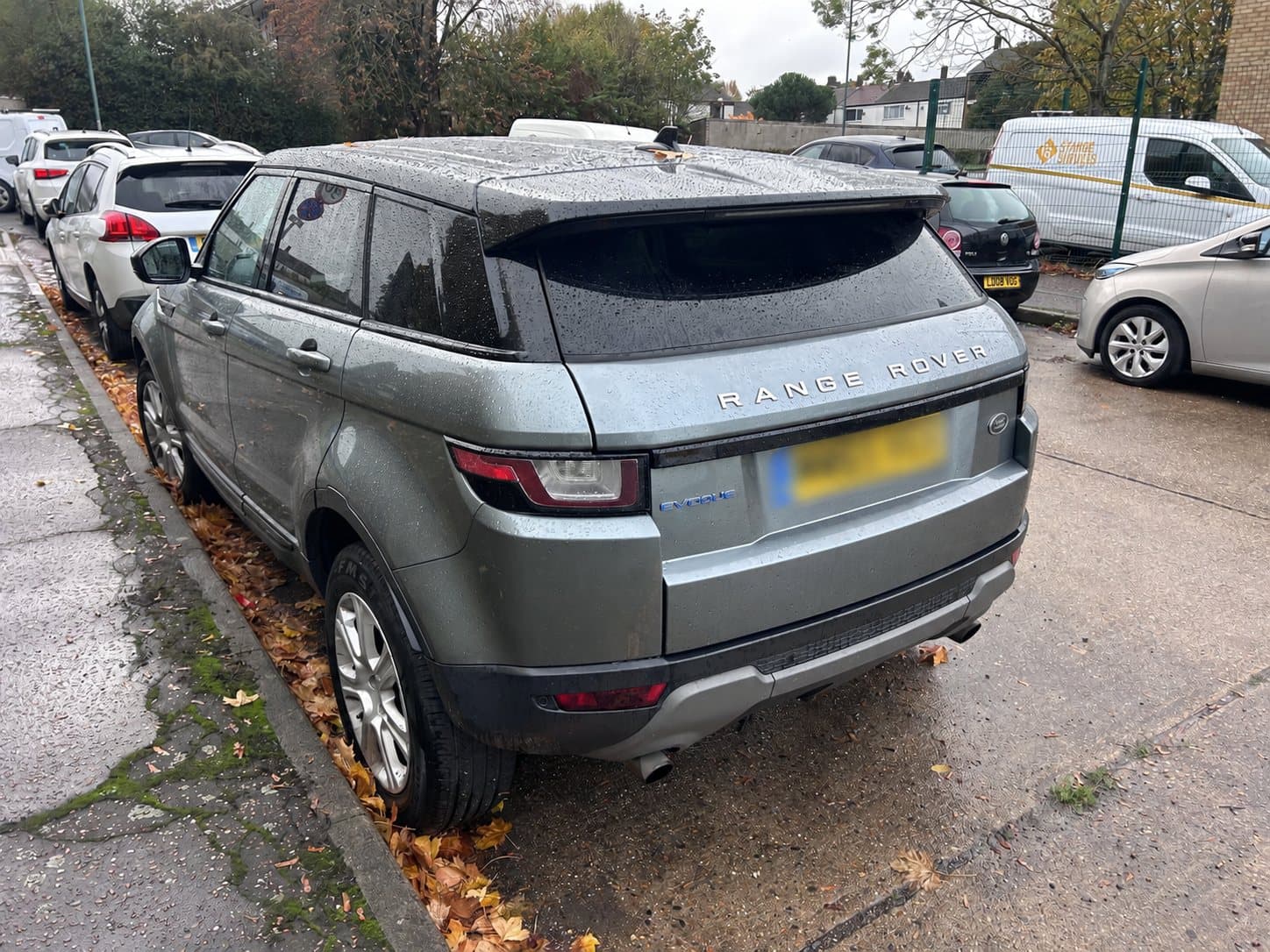
Bought in Harlow
A genuine local purchase, not a stock photograph.
Knocking engine
Reported 2.0 diesel bottom-end failure.
Bought complete
Condition and completeness protected its value.
Sell Your Faulty Range Rover Evoque
Send the registration, postcode, mileage, engine symptoms and photographs for a direct quote.
Common 2.0 Ingenium Faults and Symptoms
The symptoms below are reasons to seek diagnosis, not proof that every Ingenium engine has the same defect. Faults vary by model year, use and maintenance history. A qualified repairer should confirm the cause before expensive work is authorised.
Knocking or bottom-end damage
A deep knock that follows engine speed may point to serious internal wear, but the exact cause requires professional diagnosis. Avoid running the engine simply to demonstrate the noise.
Timing-chain noise
Rattle from the timing-chain area, particularly on start-up, should be investigated promptly. Wear can involve the chain, guides or tensioning system, and access makes corrective work labour-intensive.
Oil-pump or low oil-pressure warning
Do not keep driving after a genuine low oil-pressure warning. The cause may be oil level or condition, the pickup, pump, pressure sensor or internal wear, and loss of lubrication can damage several engine systems quickly.
DPF, EGR and oil concerns
Repeated short journeys can make diesel emissions problems harder to resolve. Failed regenerations, warning lights and changing oil condition should be assessed together rather than treated as isolated symptoms.
Turbo and loss of power
Whistling, smoke, limp mode or sudden power loss may involve the turbo, intake or emissions system. Do not assume a turbo replacement will solve the problem without diagnosis.
AdBlue and NOx warnings
Later diesel models may show AdBlue quality, dosing or NOx-sensor warnings. Some faults can trigger a no-start countdown, so record the exact dashboard message when requesting a quote.
Coolant loss or overheating
Unexplained coolant loss, overheating or contamination needs immediate attention. Continuing to drive can cause additional cylinder-head or internal engine damage.
Start With the Symptom, Not a Guess
Several Ingenium faults overlap. A warning light or noise identifies where investigation should begin, not which expensive component should automatically be replaced. This quick reference separates the symptom, the areas a repairer may investigate and the safest immediate response.
| What you notice | What may need checking | What to do next |
|---|---|---|
| Cold-start metallic rattle | Timing chain, guides or tensioner; also exclude auxiliary-drive and exhaust noises | Avoid repeated starts and arrange a cold-start inspection |
| Oil level rising or oil smells of diesel | Fuel dilution associated with incomplete or repeated DPF regeneration | Check oil condition and diagnose why regeneration is not completing |
| Red oil-pressure warning | Low oil level, restricted pickup, pump or sensor fault, or excessive internal clearance | Stop safely and switch off the engine |
| Deep knock that follows engine speed | Possible crankshaft, connecting-rod bearing or other internal damage | Do not keep running it to demonstrate the noise |
| Restricted Performance or limp mode | DPF, EGR, boost, turbo, fuelling or sensor fault | Read stored codes and live data before replacing parts |
| Blue smoke, whistle or sudden power loss | Turbocharger, oil-feed, intake or boost-control problem | Stop if smoke is heavy and have the oil supply checked |
How DPF Regeneration Can Lead to Oil Dilution
The diesel particulate filter traps soot and periodically needs a regeneration cycle to burn it off. During active regeneration the engine uses additional fuel to raise exhaust temperature. If short journeys repeatedly interrupt that process, some fuel can reach the sump and mix with the engine oil.
The result can be an oil level that rises without any top-up, oil that smells of diesel, an early service message or frequent regeneration behaviour such as a higher idle and cooling fan running after the engine is switched off. Fuel-thinned oil may not protect the chain tensioner, turbo bearings and crankshaft bearings as effectively. An oil change can remove contaminated oil, but it does not correct the DPF, sensor or driving-cycle problem that allowed dilution to recur.
A useful chain of cause and effect
Interrupted regeneration can contribute to fuel in the sump. Diluted oil can reduce lubrication quality. Poor lubrication can then accelerate wear in the timing system, turbocharger and engine bearings. That is why DPF history, oil condition, timing-chain noise and low oil pressure should be assessed together.
Ingenium Timing-Chain Issues in More Detail
The timing chain keeps the crankshaft and camshafts synchronised. If the chain, guides or tensioning system wear, the first clue may be a metallic rattle on start-up or a noise that rises and falls with engine speed. Engine-management warnings, poor running and camshaft/crankshaft correlation codes can also appear, although none of these symptoms confirms chain failure by itself.
Timing-chain work can be expensive because diagnosis must be accurate and access is labour-intensive. If a chain jumps or timing is lost, valves and pistons can be damaged. Owners should avoid repeated starts merely to reproduce a rattle and should obtain a written diagnosis before approving major repairs.
A short cold-start rattle is often associated with the chain or hydraulic tensioner because oil pressure has not yet stabilised, but not every rattle is the timing chain. Auxiliary belts, pulleys, the alternator, exhaust shields and ordinary diesel combustion noise can sound similar. A useful inspection starts with the engine genuinely cold and combines listening with fault-code and mechanical checks.
Timing-chain warning signs to report
- Rattle during a cold or warm start
- Metallic noise following engine speed
- Engine-management light or timing codes
- Rough running, hesitation or difficult starting
Oil-Pump Failure and Low Oil Pressure
The oil pump circulates pressurised oil through the engine. If pressure is lost, the crankshaft bearings, connecting-rod bearings, timing system and turbocharger may all be deprived of lubrication. That means an oil supply problem can eventually present as chain noise, turbo trouble or a heavy bottom-end knock rather than remaining a separate fault.
An oil-pressure warning does not automatically prove that the pump has failed. Low oil level, unsuitable or contaminated oil, a restricted pickup, pressure-sensor trouble, pump wear and excessive internal bearing clearance can produce similar symptoms. The oil level and condition, actual mechanical pressure and evidence of metallic debris should be checked by a competent repairer.
If the red oil-pressure warning appears
Stop safely and switch the engine off. Do not assume topping up the oil has solved the problem, and do not continue driving until the cause has been checked. Running without adequate oil pressure can turn a smaller lubrication fault into turbo, timing-chain, bearing or complete engine damage.
What Does Bottom-End Failure Mean?
The bottom end contains major rotating components including the crankshaft, bearings and connecting rods. A deep metallic knock can be associated with bearing or crankshaft damage, but sound alone is not a complete diagnosis. Oil-pressure checks, fault codes, oil inspection and mechanical assessment may be needed.
If the engine is already knocking, continuing to run it can spread metal contamination or cause more extensive damage. When safe, switch it off and arrange recovery or professional inspection.
Repair the Evoque or Sell It as It Stands?
Compare the full repair risk, not just the first estimate. Engine removal, replacement parts, fluids, emissions-system work and unexpected damage can all change the final bill. Selling can make sense when the diagnosis is serious, the repair cost is uncertain or you no longer want to fund the vehicle.
- Stop driving a knocking engine. Further use can increase the damage.
- Record the evidence. Keep diagnostic reports, dashboard messages and service information.
- Price the complete repair. Ask what is included and what could increase the estimate.
- Request an as-is quote. Compare a direct purchase against the repair cost and delay.
Repair may make sense when
- The fault has been properly diagnosed and is contained.
- The engine still has healthy oil pressure and no internal knock.
- The car is otherwise strong, valuable and worth keeping.
- The written quote includes parts, labour, fluids and warranty.
Selling may make sense when
- There is a heavy knock, seizure or confirmed internal damage.
- The repair estimate may grow once the engine is dismantled.
- Timing, turbo, DPF and lubrication faults have compounded.
- You prefer a definite as-is offer and collection date.
What a Proper Diagnosis Should Establish
Before authorising a major repair, ask for evidence that separates the primary fault from the damage it may have caused. Depending on the symptoms, that can include stored and pending fault codes, freeze-frame and live DPF data, actual oil-pressure testing, oil level and contamination checks, inspection for metallic debris, timing correlation and checks of the turbo oil feed and boost system. A fault code identifies a circuit or system; it does not always prove that the named part itself has failed.
Keep the diagnostic report and written estimate even if you decide not to repair the vehicle. Those details help us distinguish a repairable emissions fault from a non-running car with probable engine damage and can support a more accurate as-is valuation.
How We Value a Faulty Range Rover Evoque
We assess the whole vehicle: age, exact model, mileage, trim, bodywork, interior, wheels, keys, paperwork, service history, fault information and access for collection. A complete, tidy Evoque with a failed engine can be worth considerably more than a stripped vehicle or a basic weight-based scrap offer.
Frequently Asked Questions
Can I sell a Range Rover Evoque with a knocking engine?
Yes. Essex Scrap buys complete Range Rover Evoques with knocking engines and suspected or confirmed internal engine damage. Stop driving the vehicle and tell us what the garage has diagnosed, whether it starts and where it is located.
Do you buy Evoques with Ingenium bottom-end failure?
Yes. We can quote for a 2.0 diesel Ingenium Evoque with suspected or confirmed bottom-end failure. The offer depends on the vehicle's age, mileage, specification, overall condition, completeness and collection requirements.
What faults can affect a 2.0 diesel Ingenium Evoque?
Issues reported by owners and repairers include timing-chain noise, DPF and EGR trouble, oil contamination or dilution, turbo faults, AdBlue or NOx-system warnings, coolant loss and internal engine wear. A symptom does not prove a particular failure, so obtain a professional diagnosis before authorising repairs.
Why is the oil level rising in my 2.0 diesel Evoque?
A rising oil level can indicate diesel fuel entering the sump during repeated or interrupted DPF regeneration. The diluted oil may offer less protection to the timing system, turbocharger and engine bearings. Do not drain a little oil and ignore the cause: have the regeneration history, oil condition and DPF system checked.
What are the signs of an Ingenium timing-chain problem?
Possible warning signs include a metallic rattle on start-up, chain noise that follows engine speed, engine-management warnings, poor running or camshaft and crankshaft correlation fault codes. Similar symptoms can have other causes, so the engine should be professionally inspected rather than diagnosed from sound alone.
Can an oil-pump or low oil-pressure fault damage an Ingenium engine?
Yes. If oil pressure is genuinely low, bearings, the crankshaft, turbocharger and timing components may be starved of lubrication. An oil-pressure warning can have several causes, including oil level, oil condition, the pickup, pump, sensor or internal wear. Stop the engine safely and have the cause checked before driving further.
Should I keep driving an Evoque with an engine knock?
No. A persistent metallic knock can indicate serious internal damage. Switch the engine off when safe, avoid restarting it and arrange professional diagnosis or recovery. Continued use can turn a repairable problem into complete engine failure.
Will you collect a non-running Range Rover Evoque?
Yes, subject to vehicle access and an agreed quote. Tell us whether the Evoque rolls, steers, selects neutral and has working brakes so the correct collection equipment can be arranged.
What do you need to value my faulty Evoque?
Send the registration, postcode, mileage, specification, key and V5C availability, a description of the fault and clear photographs. A garage report or diagnostic codes can also help, but they are not essential for an initial quote.
Get a Quote for Your Evoque
We are an Essex-based vehicle buyer serving Harlow and surrounding areas. For selected complete vehicles we can also consider enquiries from farther afield. Send honest details and clear photographs so we can assess the fault, remaining vehicle value and collection requirements quickly.